
Project Scope
Patient mobile app
My Role
Product Designer (End-to-End)
Duration
3 weeks for the course Project
10 weeks for design
StudyMatch
Create a platform that helps students and parents easily find trusted tutors nearby or online, while allowing safe communication and flexible lesson arrangements.
The Problem
Students preparing for exams such as GCSEs and college assessments often need extra academic support outside school. However, finding a reliable tutor can be difficult and time-consuming.
Many parents and students rely on social media, scattered websites, or personal recommendations, which makes it hard to compare tutors based on experience, reviews, availability, and lesson format.
StudyMatch was designed to simplify this process by providing a centralised platform where users can easily search for tutors by subject, location, and learning preference, while communicating safely through a secure messaging system.
Finding the right tutor is often a fragmented and frustrating experience for both students and tutors.
For Students & Parents
- Difficulty finding qualified tutors nearby
- Limited visibility into experience, pricing, and reviews
- Uncertainty between online vs in-person lessons
- Communication often happens through informal or unsafe channels
- Hard to compare multiple tutors efficiently
For Tutors
- Difficulty reaching students who need their expertise
- Limited ways to showcase experience and credibility
- Managing lesson requests and communication across multiple platforms
- Lack of a structured system to organise availability and bookings
These challenges highlight the need for a centralised and trusted platform that connects both sides efficiently.
Research
Step 1
Bussiness Goal
The goal of StudyMatch is to create a platform that seamlessly connects students and tutors, while building trust and simplifying the tutoring process.
The product focuses on:
- Helping students and parents find trusted tutors easily
- Enabling tutors to reach relevant students
- Providing a safe and structured communication system
- Supporting both online and in-person learning
- Improving transparency through reviews and verification
By addressing both user groups, the platform aims to create a balanced and scalable marketplace.
Step 2
Research & Discovery
To understand the problem space, research focused on how students and tutors currently find and manage tutoring services.
This included reviewing existing platforms, analysing user behaviour, and identifying common pain points across both groups.
The research revealed three key needs:
- Trust — users need verified profiles, reviews, and secure communication
- Convenience — easy search, filtering, and booking experience
- Control — flexibility in managing lessons, availability, and communication
Both students and tutors expressed frustration with scattered systems and lack of transparency, reinforcing the need for a unified platform.
Step 3
Defining the Solution Strategy
Based on these insights, the solution focused on designing a two-sided platform that supports both students and tutors equally.
The strategy was built around three core principles:
Simplicity
Create an intuitive experience that allows students to quickly find tutors and tutors to easily manage their services.
Transparency
Provide clear information on tutor profiles, pricing, availability, and reviews to build trust.
Control
Allow both users to manage their experience — from booking lessons to communication and scheduling — within a single platform.
This approach ensures a smooth and reliable experience for both sides, making StudyMatch a more effective and trustworthy tutoring solution.
TARGET USERS
The platform focuses on two main user groups.
Students / Parents
Students preparing for important exams such as GCSEs or college assessments, and parents looking for reliable tutors who can provide additional academic support.
Tutors
Teachers, university students, or professionals who want to offer tutoring services and connect with students who need help in their subject areas.
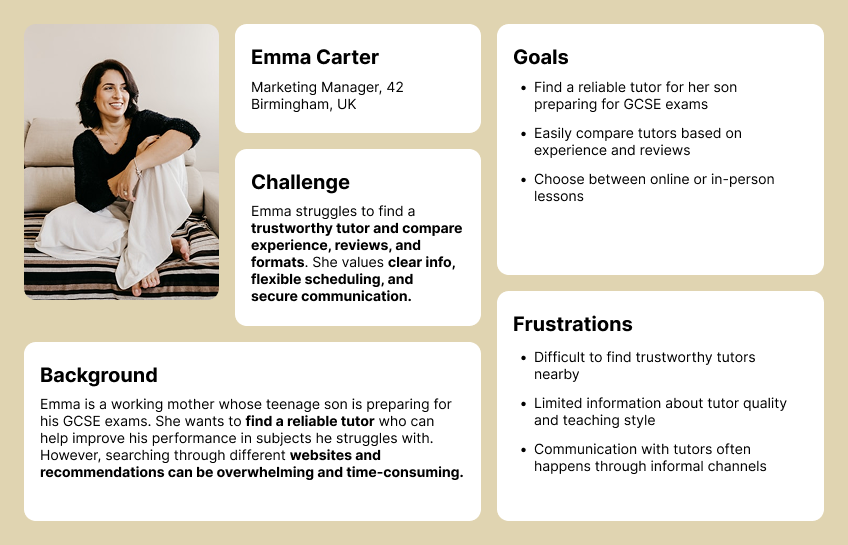
PERSONA #1: THE CONCERNED PARENT
Parents want to ensure their children receive the academic support they need to succeed in school. Many struggle to find tutors they can trust, especially when preparing for important exams like GCSEs.
Their biggest challenge is identifying reliable tutors nearby while ensuring communication and lesson arrangements happen through a safe and organised platform.
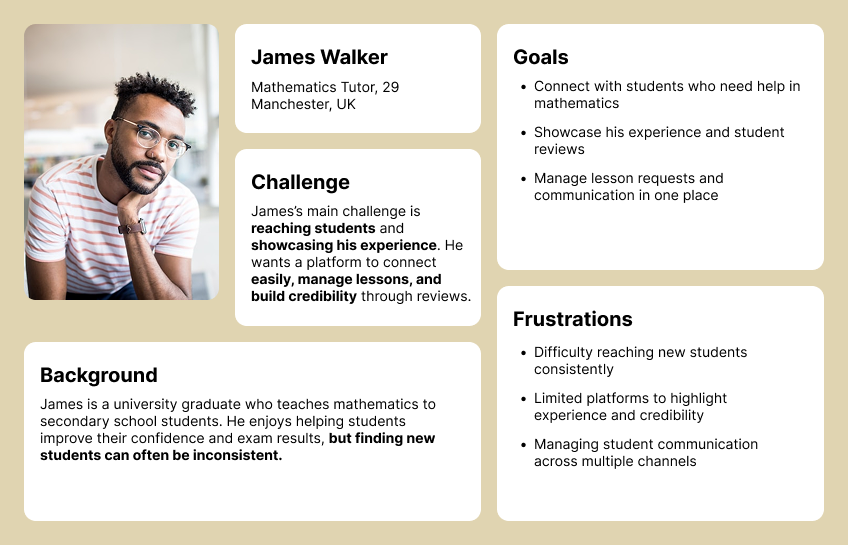
PERSONA #2: THE INDEPENDENT TUTOR
Tutors want a reliable way to connect with students who need help in their subject areas. Many rely on word-of-mouth or multiple platforms to find new students, which can be inconsistent.
Their biggest challenge is reaching the right students while showcasing their experience, reviews, and availability in a clear and professional way.
Feature Prioritisation
To avoid feature overload and focus on delivering value early, features were prioritised into MVP, Should-Have, and Future Enhancements.
MVP Features
Core features required for both students and tutors:
- Search tutors by subject, location, and level (GCSE, A-Level)
- Filter by online or in-person lessons
- View tutor profiles, ratings, and reviews
- Secure in-app messaging
- Send and receive lesson requests
- Tutor profile creation (subjects, experience, pricing)
- Basic availability management
Should-Have Features
Enhancements to improve usability and experience:
- Save favourite tutors
- Push notifications for messages and requests
- Calendar view for lesson scheduling
- Booking confirmations
- Verified tutor badge
Future Enhancements
- Potential features for future growth:
- Subscription or package-based lessons
- In-app payments
- Video lessons integration
- AI tutor recommendations
- Progress tracking for students
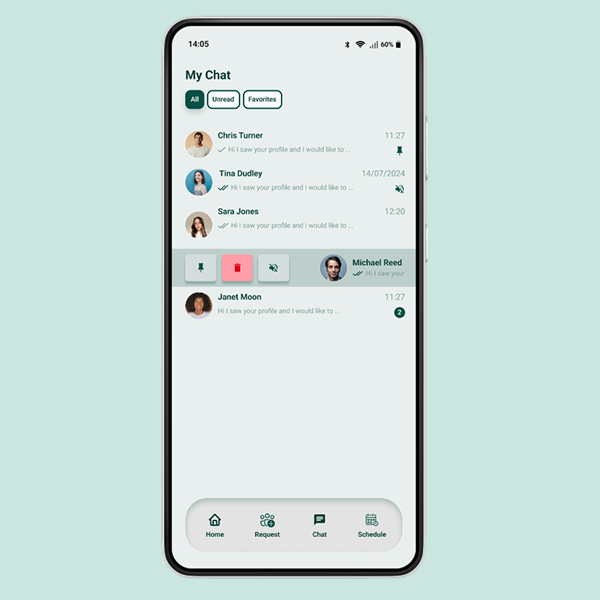
Design Process
After defining the features, the design process focused on creating a balanced experience for both students and tutors.
The goal was to design a platform that feels simple to use, trustworthy, and efficient, while supporting both sides of the marketplace.
Userflow
Wireframe
UI Design
Testing
Iteration
User Flow
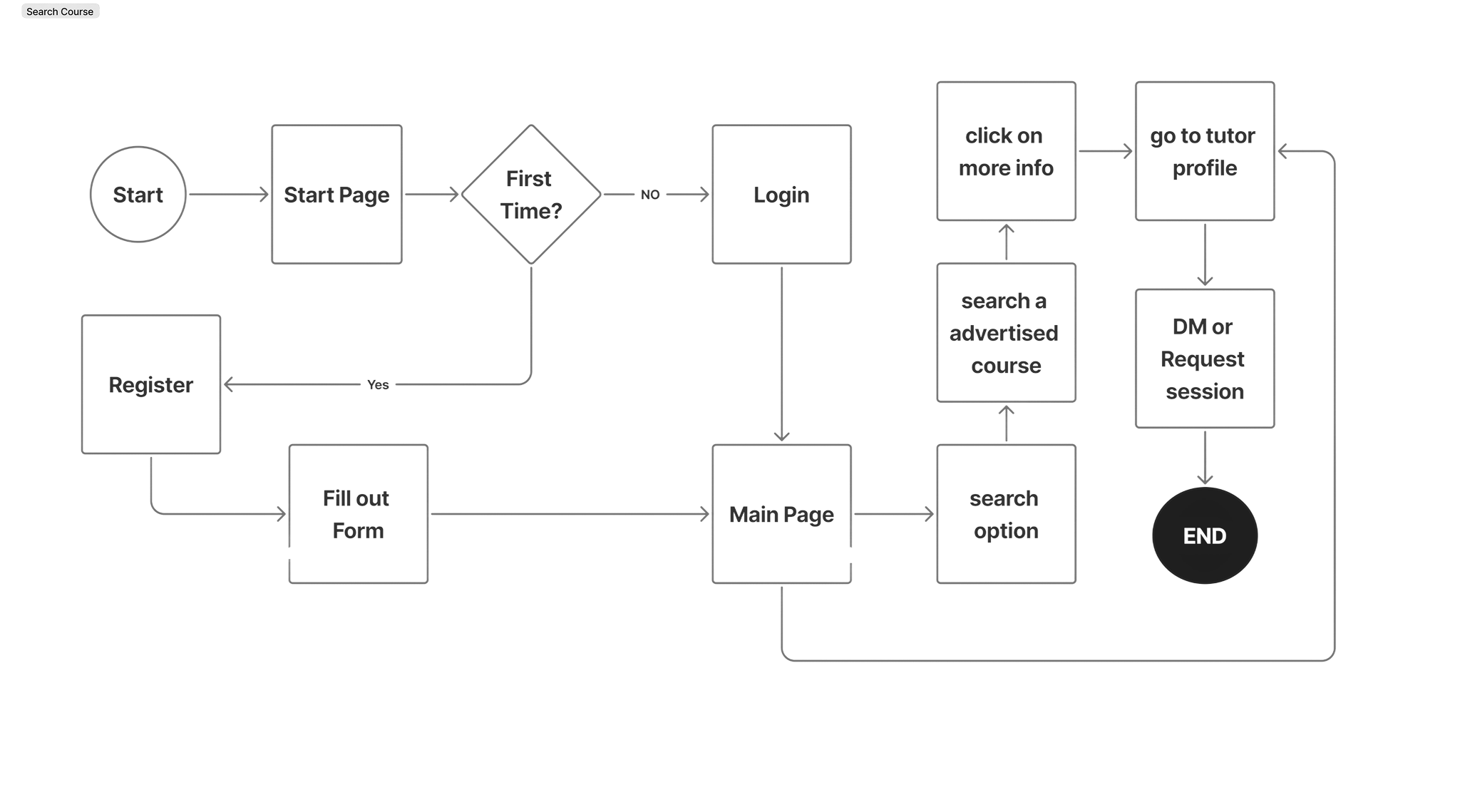
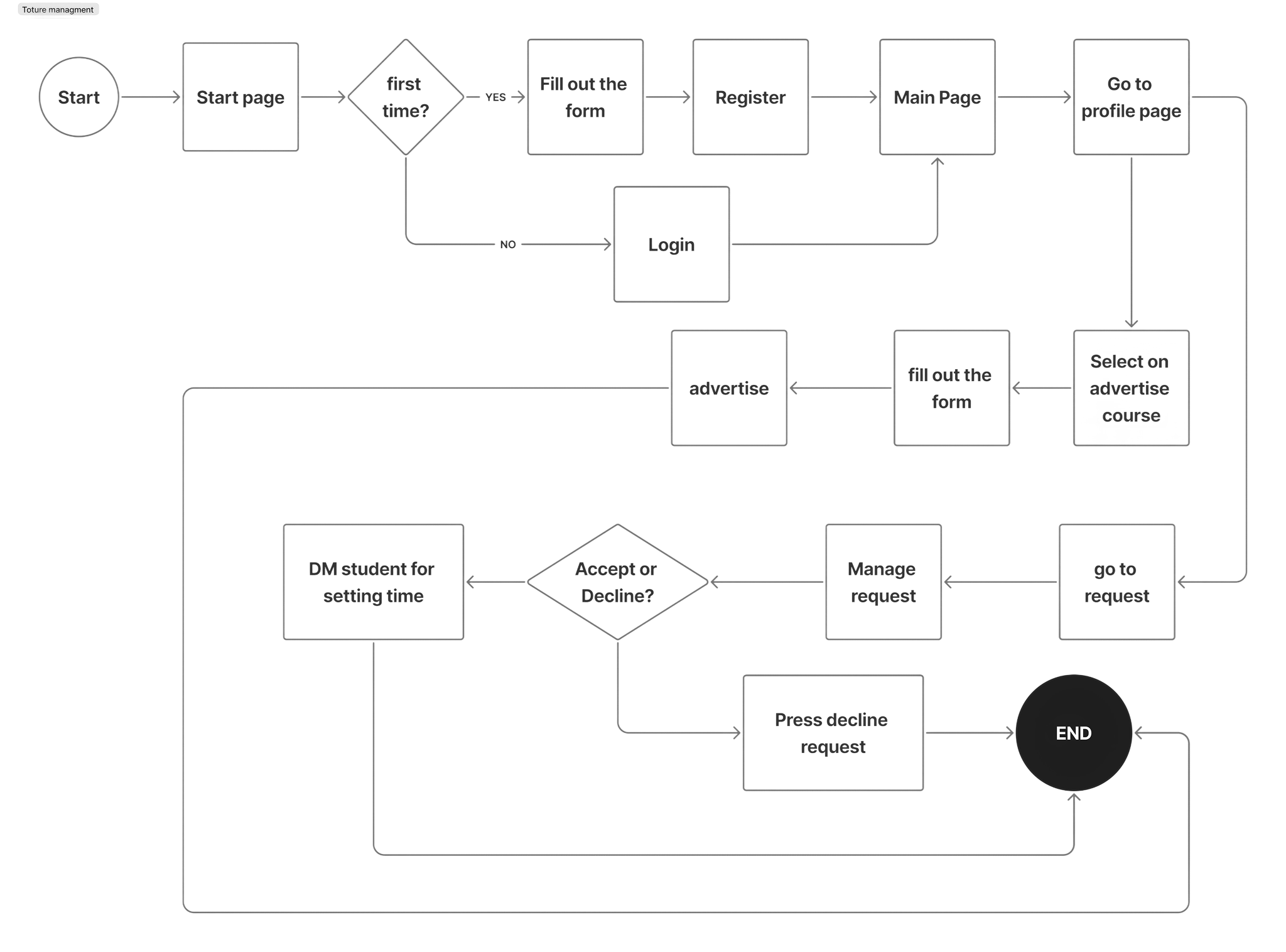
To better understand how users would interact with the platform, I mapped the key journeys for both students and tutors. Visualising these flows helped identify potential friction points in the tutor search, communication, and booking process, and guided the creation of a more streamlined experience.
Mapping these flows ensured that both users could easily find, connect, and manage lessons while keeping the platform simple, intuitive, and efficient.
Students
For students, the primary goal is to find a tutor that matches their learning needs. This can be achieved by using the search functionality, where users can filter results based on key parameters such as subject, availability, lesson type (online or in-person), and price.
Alternatively, students can explore recommended or top-rated tutors in their area directly from the home screen. From there, they can view tutor profiles and either send a lesson request or start a conversation through the messaging system.
Totur
For tutors, the primary goal is to showcase their services and connect with students who are looking for support in their subject areas. Tutors begin by creating and managing their profile, including subjects offered, experience, pricing, and availability.
Once their profile is active, tutors can receive lesson requests from students, review the details, and either accept or decline them. They can also communicate directly with students through the in-app messaging system to discuss requirements before confirming a session.
This flow allows tutors to efficiently manage their teaching activities while maintaining clear and organised communication with students.
Wireframing
Once the core user flows were established, I translated them into low-fidelity wireframes. At this stage, the focus was on defining structure, hierarchy, and usability rather than visual design.
Early wireframes explored different ways to simplify the tutor discovery and booking process while reducing cognitive load. Multiple layout variations were tested to determine how information such as tutor profiles, ratings, availability, and lesson types could be presented clearly and efficiently for users.
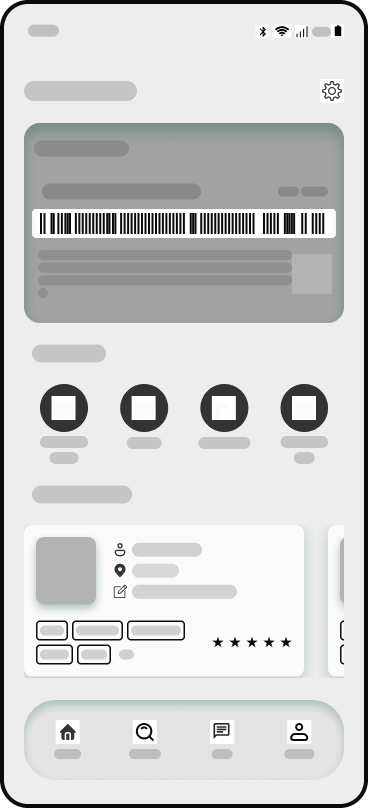
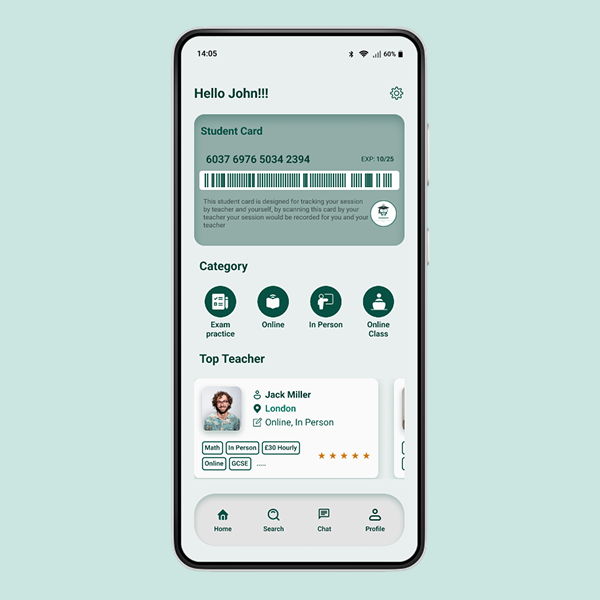
Main Page
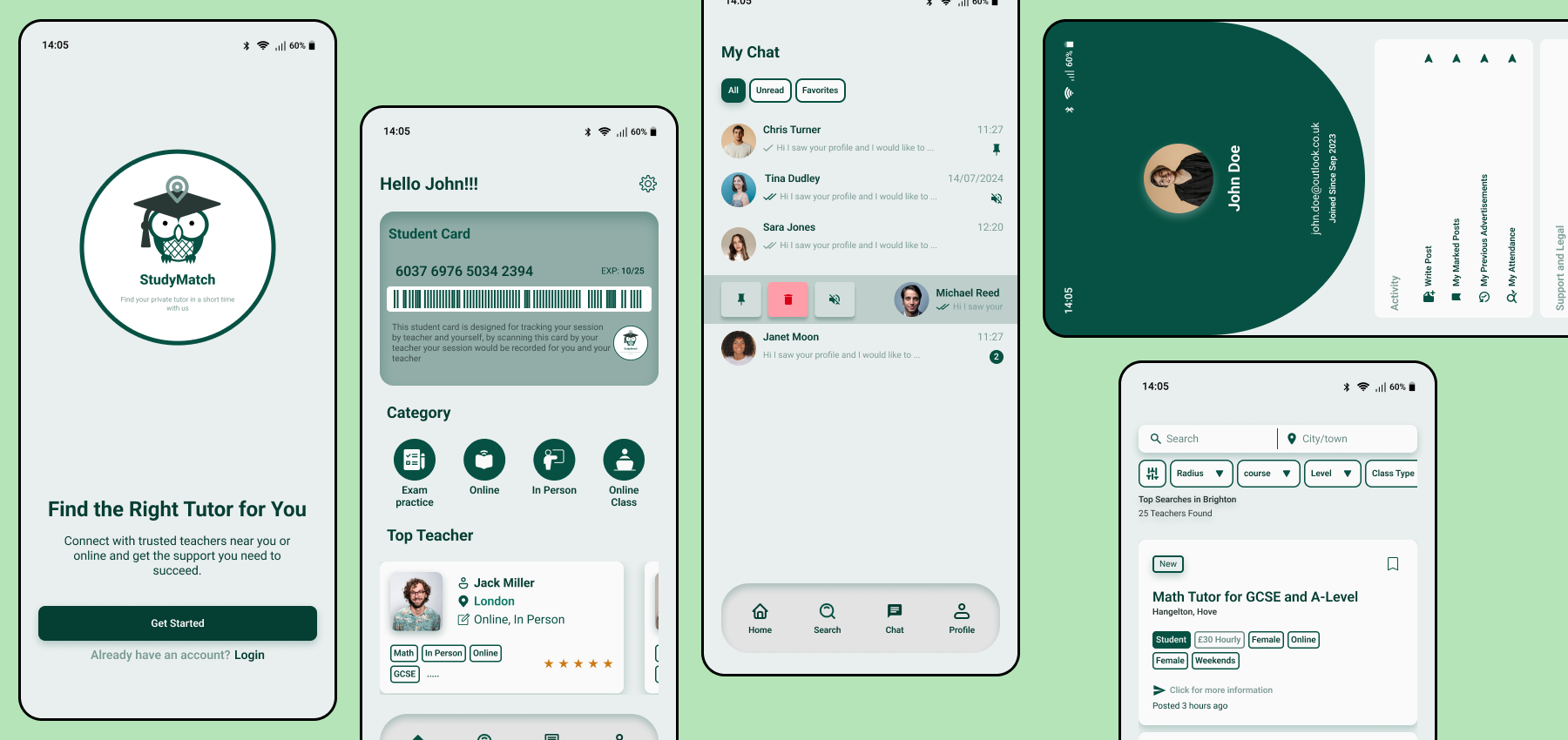
Students can view their personal dashboard, explore different class categories, and discover top-rated tutors in their area. This page provides quick access to key features, helping users easily find and connect with the right tutor.
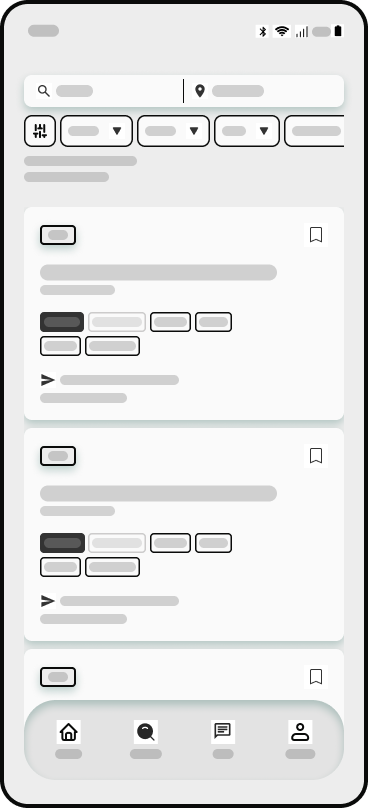
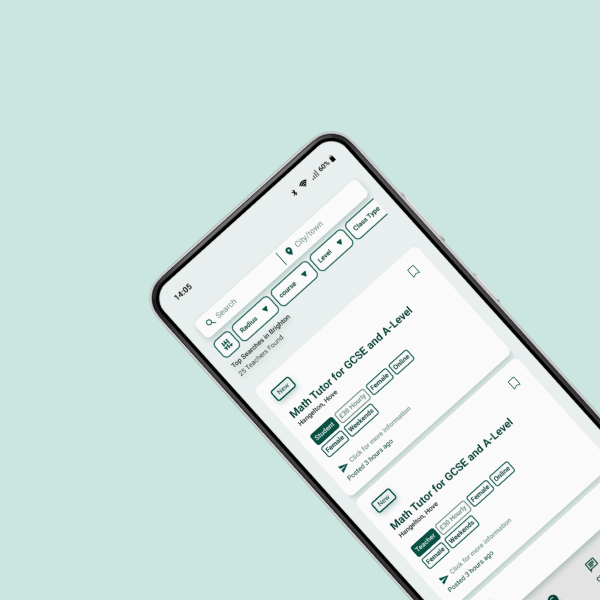
Search
Students can search for suitable tutors using filters that match their needs, such as subject, availability, lesson type, and price. This allows them to quickly find the most relevant options.
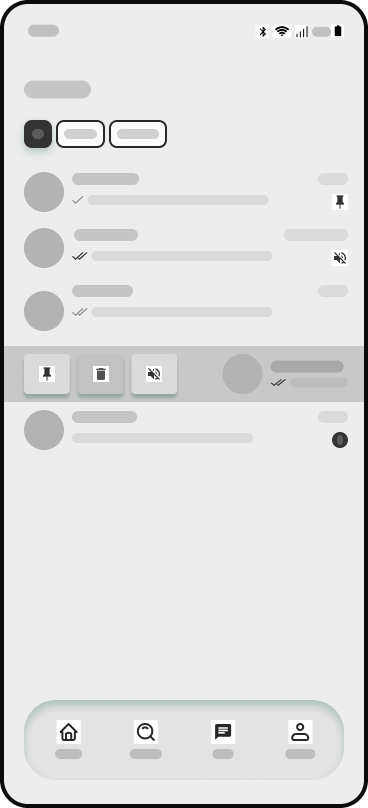
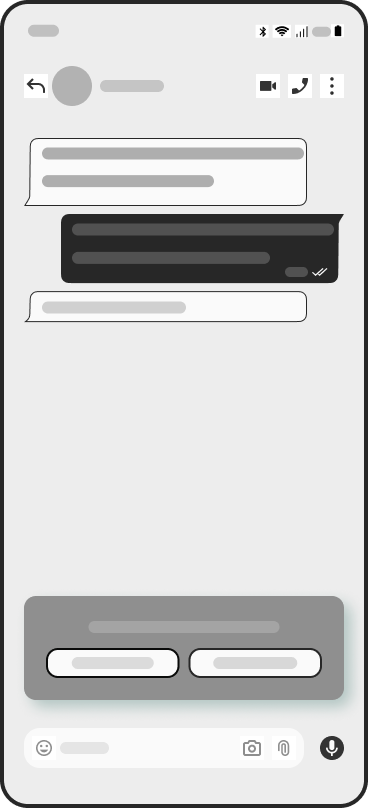
Online Chat
Students can communicate with tutors through a secure in-app messaging system, allowing them to discuss details and arrange suitable times for their sessions in a safe environment.
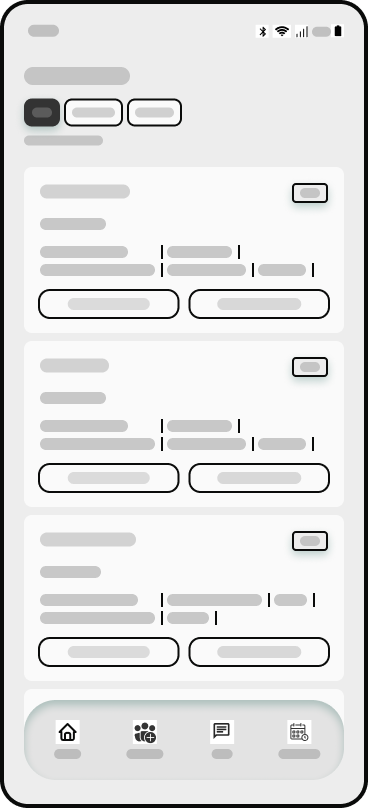
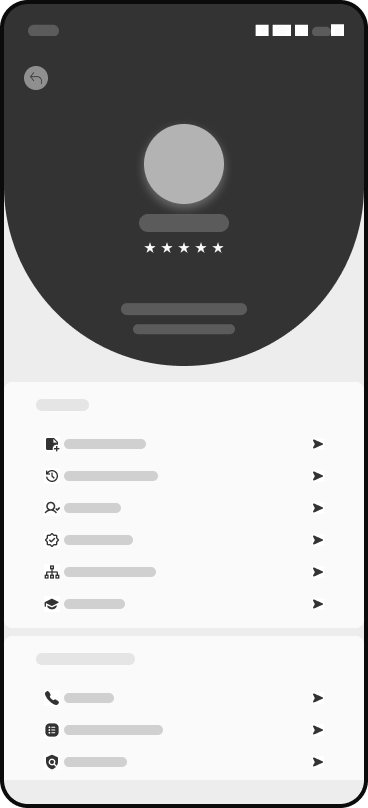
Totur Application
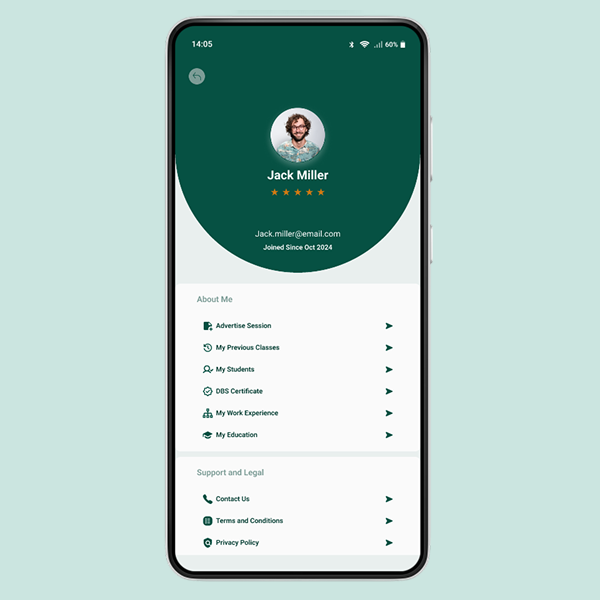
Tutors can manage their classes, set up and update their profiles, showcase the courses they offer, and communicate with students through the platform.
UI Design
After validating the structure through wireframes, I moved on to high-fidelity designs to establish the visual language and overall brand identity of the platform.
The interface was designed to feel clean, approachable, and easy to use, ensuring both students and tutors can navigate the platform without confusion. Clear typography, consistent spacing, and strong visual hierarchy were used to support usability across the app.
Bulding the Brand



To create a cohesive experience across the platform, a simple and modern brand identity was developed.
The visual design focuses on creating a calm and welcoming experience, avoiding unnecessary complexity while keeping the interface engaging and easy to understand.
The primary colour represents trust, stability, and confidence, helping users feel secure when choosing tutors and managing their learning.
The secondary colour adds balance and supports a more approachable and friendly tone, used for backgrounds and supporting elements.
Together, these colours create a brand that feels reliable, calm, and education-focused, without overwhelming the user.
Brand Name
StudyMatch
Finding the right tutor can be challenging, especially when trust and compatibility are important. The name StudyMatch reflects the platform’s purpose of connecting students with tutors who best match their learning needs.
“Study” represents learning and progress, while “Match” highlights the idea of creating meaningful connections between students and tutors.
The name reinforces a brand that feels supportive, simple, and focused on helping users succeed.
Usability Testing
To evaluate the effectiveness of the design, usability testing sessions were conducted with participants acting as both students and tutors.
Participants were asked to complete key tasks such as searching for tutors, filtering results, sending lesson requests, and responding to student inquiries. Observing user behaviour helped identify areas where the experience could be improved.
Testing showed that users found the platform easy to navigate, particularly the search and filtering system. However, some participants wanted clearer visibility of tutor availability and lesson formats before sending a request. In response, availability indicators and lesson types were made more prominent.
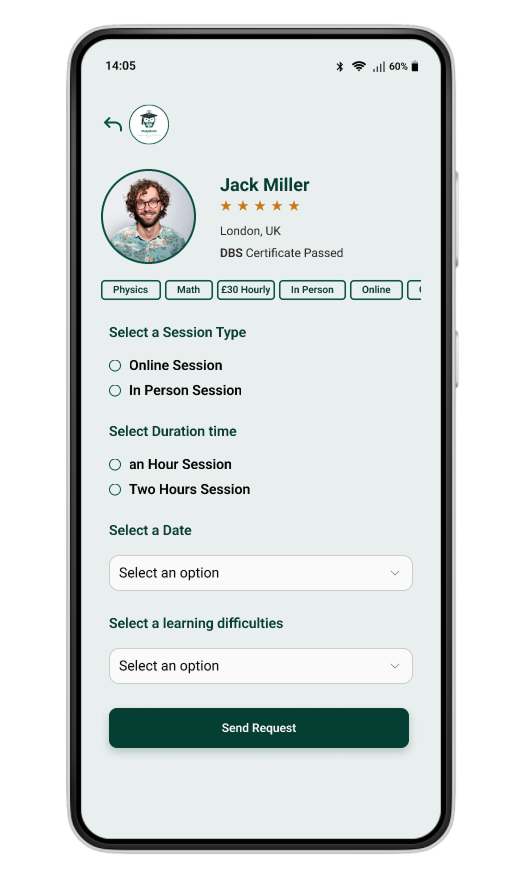
Additionally, tutors highlighted the need for better context when receiving requests. Some reported that students would send lesson requests without providing enough detail about their needs or level, making it difficult to prepare sessions effectively.
To address this, a short pre-booking questionnaire was introduced, allowing students to describe their goals and requirements in advance.
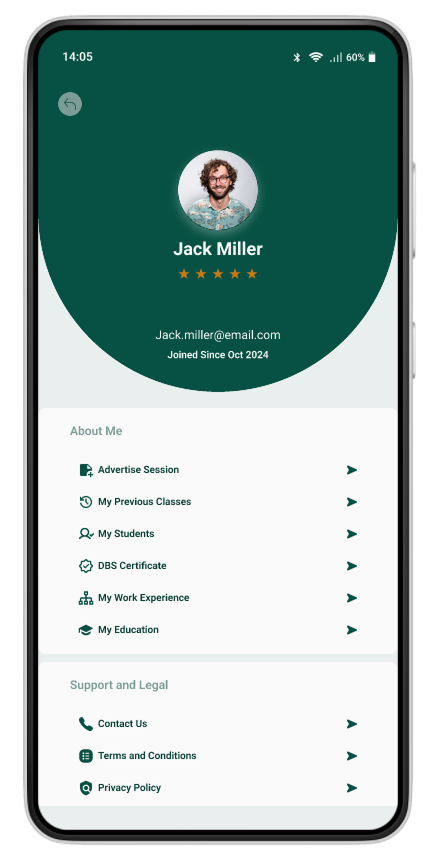
Another important insight focused on safety and trust, particularly from parents. Participants expressed the need for stronger verification of tutors. As a result, a mandatory DBS certificate requirement was introduced for all tutors, ensuring that only verified and background-checked educators can offer services on the platform.
This significantly improves user confidence and creates a safer environment for students.
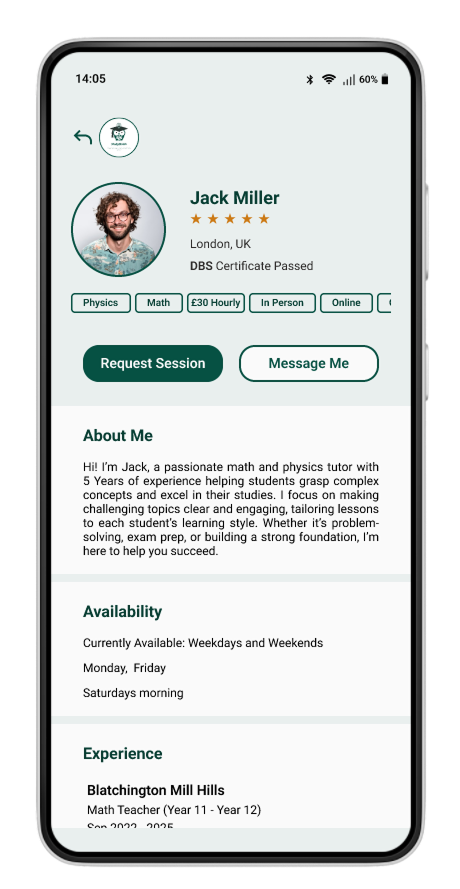
Further refinements were made to simplify profile setup for tutors and improve clarity across the platform.
pre-booking questionnaire
More detailed Profile
DBS Certificate
Iterations & Refinement
User testing revealed several areas where the experience could be improved. By observing how both students and tutors interacted with the platform, a number of refinements were introduced to make the process clearer and more efficient.
SIMPLIFYING SEARCH & FILTERING
Some students felt overwhelmed by too many filter options. To improve usability, filters were simplified and prioritised, making it easier to quickly find relevant tutors based on key criteria.
IMPROVING TUTOR PROFILE CLARITY
Users wanted clearer visibility of important tutor information. Profiles were updated to highlight key details such as subject, rating, lesson type, and availability, helping students make faster decisions.
ADDING A PRE-BOOKING QUESTIONNAIRE
Tutors noted that lesson requests often lacked enough detail about student needs. A short questionnaire was introduced to allow students to describe their goals and level before sending a request, helping tutors better prepare for sessions.
INTRODUCING TUTOR VERIFICATION (DBS)
Safety was a key concern, especially for parents. A mandatory DBS certificate requirement was added for tutors, along with a visible verification badge on profiles, increasing trust and confidence in the platform.
These refinements helped create a smoother and more reliable experience for both students and tutors.
Takeaways
Designing StudyMatch provided an opportunity to explore how digital platforms can simplify the process of connecting students with tutors.
The goal of this project was not only to design a tutor discovery app, but to create a balanced system that supports both students searching for help and tutors offering their services.
Throughout the process, it became clear that trust, simplicity, and transparency are essential in education platforms. Students and parents need to feel confident when choosing a tutor, while tutors need tools that help them manage requests and communicate efficiently.
Balancing the needs of both user groups played a key role in shaping the design decisions.
If the project were to continue, future improvements could include features such as integrated payments, video lessons, and personalised tutor recommendations. Expanding usability testing with a wider range of users would also help further refine the experience.
Overall, this project demonstrates how thoughtful design can turn a fragmented process into a clear, structured, and user-friendly experience for both students and tutors.